Musikliste

Erstelle eine Musikliste mit Timecodes, Nutzungslängen und Metadaten aus deiner Schnittsequenz. Lade eine XML- oder EDL-Datei hoch und generiere eine CSV-, XLSX-, PDF-, TXT-Datei oder ein anderes Format zur Verwendung in Google Sheets, Microsoft Excel, Apple Numbers und ähnlichen Programmen.

Framerate
Exportieren
Vorlage
Warning! This preset only works for XLSX (Excel) exports.
Frame handles

Choose the music libraries that you want to check for more metadata:


in Bearbeitung...

We created this tool to save you time!

30.000+

cue sheets created

1.500.000+

audio clips processed

15.000.000+

track metadata records

Was macht dieses Tool?

Der Cue Sheet Generator hilft dir dabei, eine einfache Musikliste zu erstellen, einschließlich der Timecodes und Nutzungsdauer. Er fasst außerdem mehrere Spuren zusammen und entfernt unsichtbare Schnitte, um eine saubere Übersicht zu bekommen. Du kannst die Liste als PDF oder im CSV/TXT-Format exportieren, um diese z. B. in Google Sheets, MS Excel oder Apple Numbers weiter zu bearbeiten.

Welche Dateiformate kann ich hochladen?

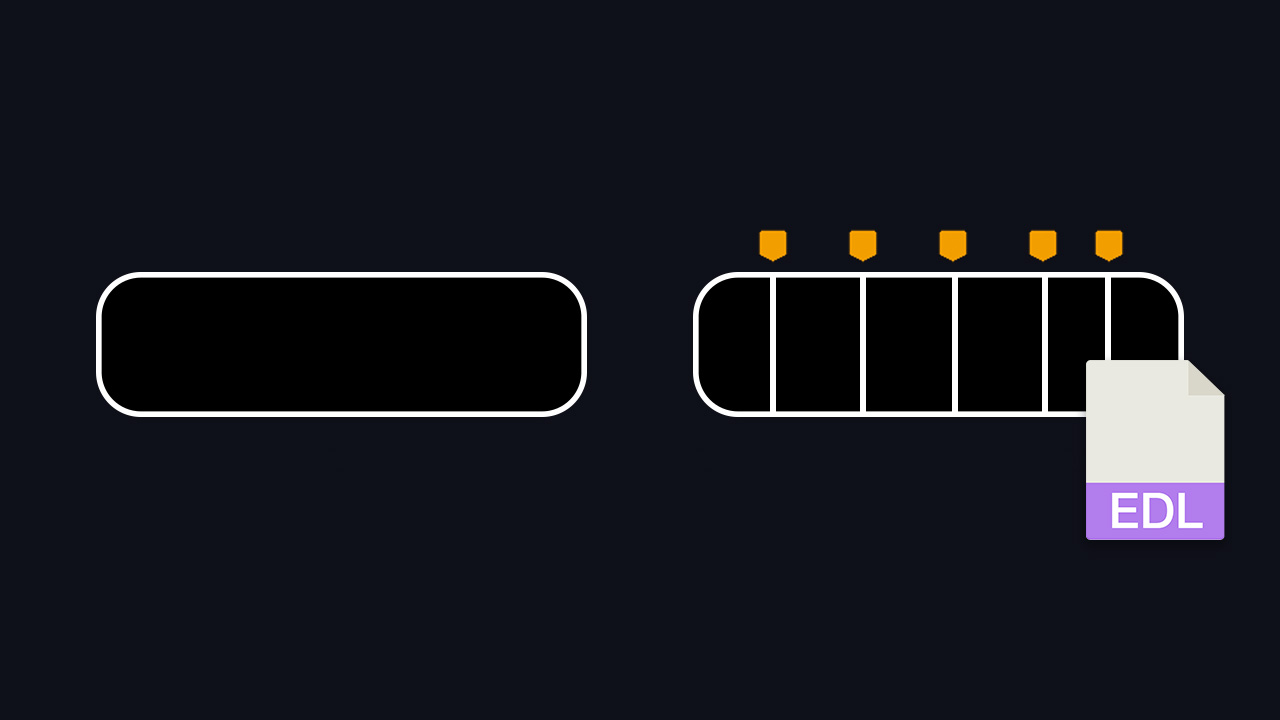
  • EDL - Edit Decision List (.edl)
  • XML - Final Cut 7 XML (.xml)
  • XML - Extensible Markup Language (.xml) (Avid Media Composer)
  • TXT - Avid Pro Tools TXT -> Session Info als Text (.txt)
  • FCPXML - Final Cut Pro X (.fcpxml)
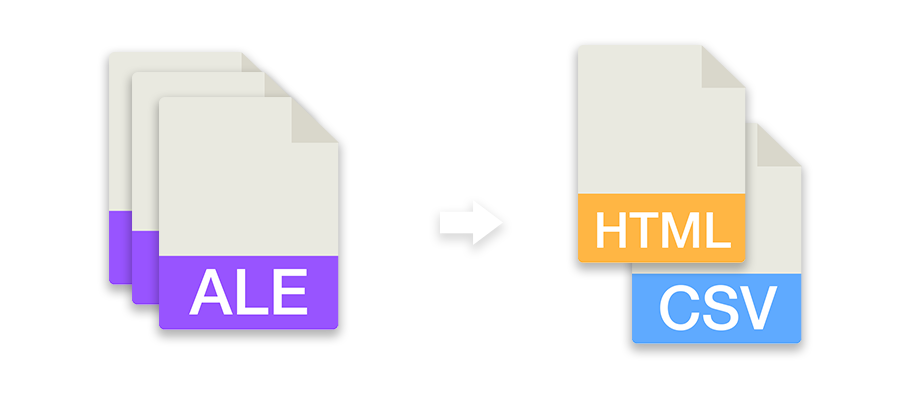
  • CSV (comma or semicolon separated) (.csv)
  • AAF - Advanced Authoring Format (.aaf) → only in our Cue Sheet Manager for Pro Users

Scan production music libraries for metadata

By partnering with over 20 production music libraries, the tool is able to automatically pull metadata for tracks from these libraries. The metadata contains not only the track name and artist but also details about the label, publisher, composer details, and shares. Please note that the available metadata depends on the library.

Schau dir die Musik aus den Bibliotheken an, die mit uns zusammenarbeiten, und erleichtere dir die Arbeit, indem du Titel aus diesen Bibliotheken verwendest.


Fehlt dir eine Bibliothek oder arbeitest du für eine Musikbibliothek? Kontaktiere uns und werde Partner, damit deine Kunden von unserem Tool profitieren können. Partner zu werden ist ein einfacher und unkomplizierter Prozess.

Die Metadaten werden anhand der Dateinamen hinzugefügt. Um sicherzustellen, dass alle Lieder erkannt werden, solltest du die Dateien nach dem Herunterladen nicht umbenennen. Wir übernehmen keine rechtliche Haftung für die Richtigkeit der Daten. Du bist verpflichtet, die Korrektheit deiner Musikliste selbst zu überprüfen.
The workflow in detail

Learn how this cue sheet tool works.

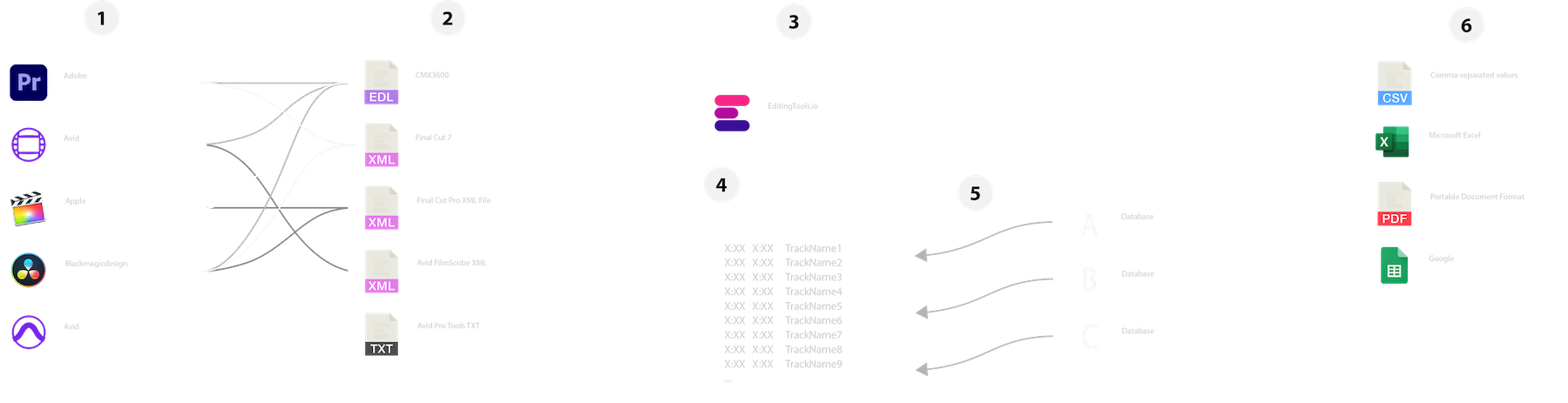
There are 6 simple steps you can follow to get the best workflow results:

  1. Prepare the sequence for which you want to create a cue sheet. It is best to make a copy and clean up the tracks, removing clips that do not belong there. It is a good idea to collect all the cues on 2 or 3 tracks and export only those tracks.
  2. Depending on the software you are using, you can export an EDL, XML or ProTools Session TXT. If you are using Adobe Premiere Pro or DaVinci Resolve, we recommend that you export a Final Cut 7 XML.
  3. Upload your sequence to our Music Cue Sheet Tool and choose your desired settings. The tool will analyze your sequence and create a sorted track list.
  4. The track list calculates the duration of each clip. Depending on your settings, similar clips are grouped together.
  5. If you enable the "Include metadata from music libraries" option and select the libraries from which you used music, the tool will check for additional metadata in those libraries. The information is pulled from data provided directly by our library partners via API or shared database. This includes information about the music album, the composer and artist up to library codes and label names.
  6. Once all the information is collected, it is exported to the file format of your choice. The recommended export format is CSV, which contains all the data you need and can be easily edited using Excel, Numbers, or Google Sheets.

Beispiel Dateien

Probiere den Musiklisten Generator mit einer Beispiel Sequenz aus:

Sequenz vorbereiten

Bevor du deine Sequenz hochlädst, empfiehlt es sich, sie kurz vorzubereiten. Das geht am besten, indem du deine Sequenz duplizierst und alle unnötigen Audio- und Videospuren entfernst. Es ist außerdem wichtig, alle Spuren zu "flatten", falls du "nested" bzw. verschachtelte Audioclips verwendest. Entferne ggf. auch andere "Audioübergangseffekte" aus der Sequenz.

Überlappende identische Clips zusammenführen

Wenn diese Option aktiviert ist, werden Clips, die in deiner Sequenz in mehrere Teile zerschnitten sind, automatisch zu einem einzigen Eintrag zusammengeführt, solange es keine Unterbrechung zwischen ihnen gibt. Wenn das Werkzeug denselben Clip auf mehreren Spuren findet, werden diese ebenfalls zusammengeführt und als ein einziger Eintrag angezeigt.

Verwende Rahmengriffe, um identische Clips zu finden und zusammenzuführen

Mit dieser Option kannst du Clips zusammenfügen, auch wenn zwischen ihnen eine Lücke besteht. Du kannst einen Bereich von 1 bis 500 Bildern festlegen, der abgedeckt werden soll. Wenn das Werkzeug denselben Clip auf mehreren Spuren findet, werden diese ebenfalls zusammengeführt und als ein einziger Eintrag angezeigt.

Vorlage

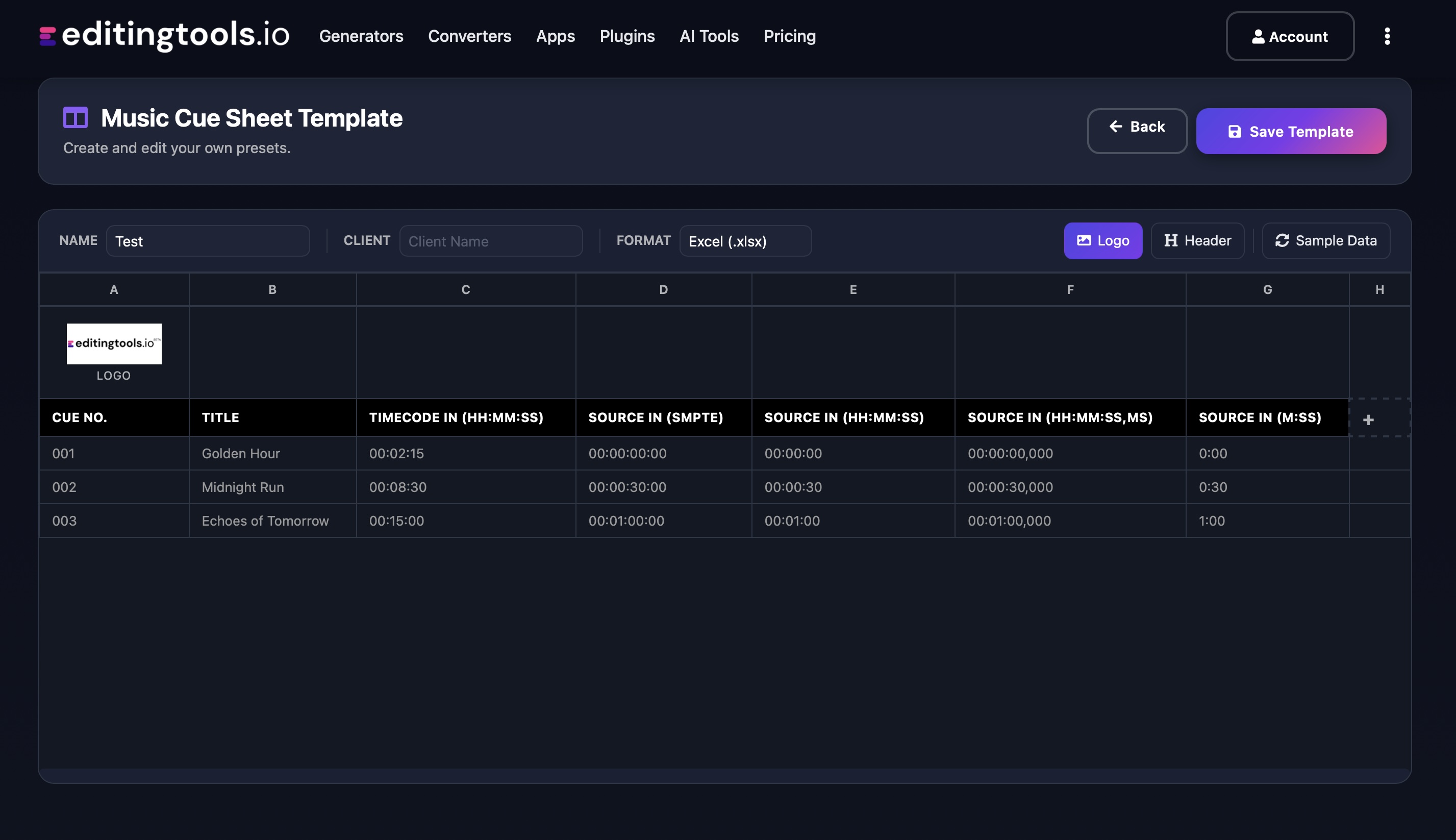
Du kannst die Spalten in den Exportdateien individuell anpassen. Wähle aus mehreren öffentlichen Vorlagen oder drücke das Plus-Zeichen, um deine eigene Vorlage zu erstellen. Es gibt unzählige Möglichkeiten für die Anzeige von Timecodes, Längen und individuellen Metadaten. Um Vorlagen zu speichern, musst du eingeloggt sein.

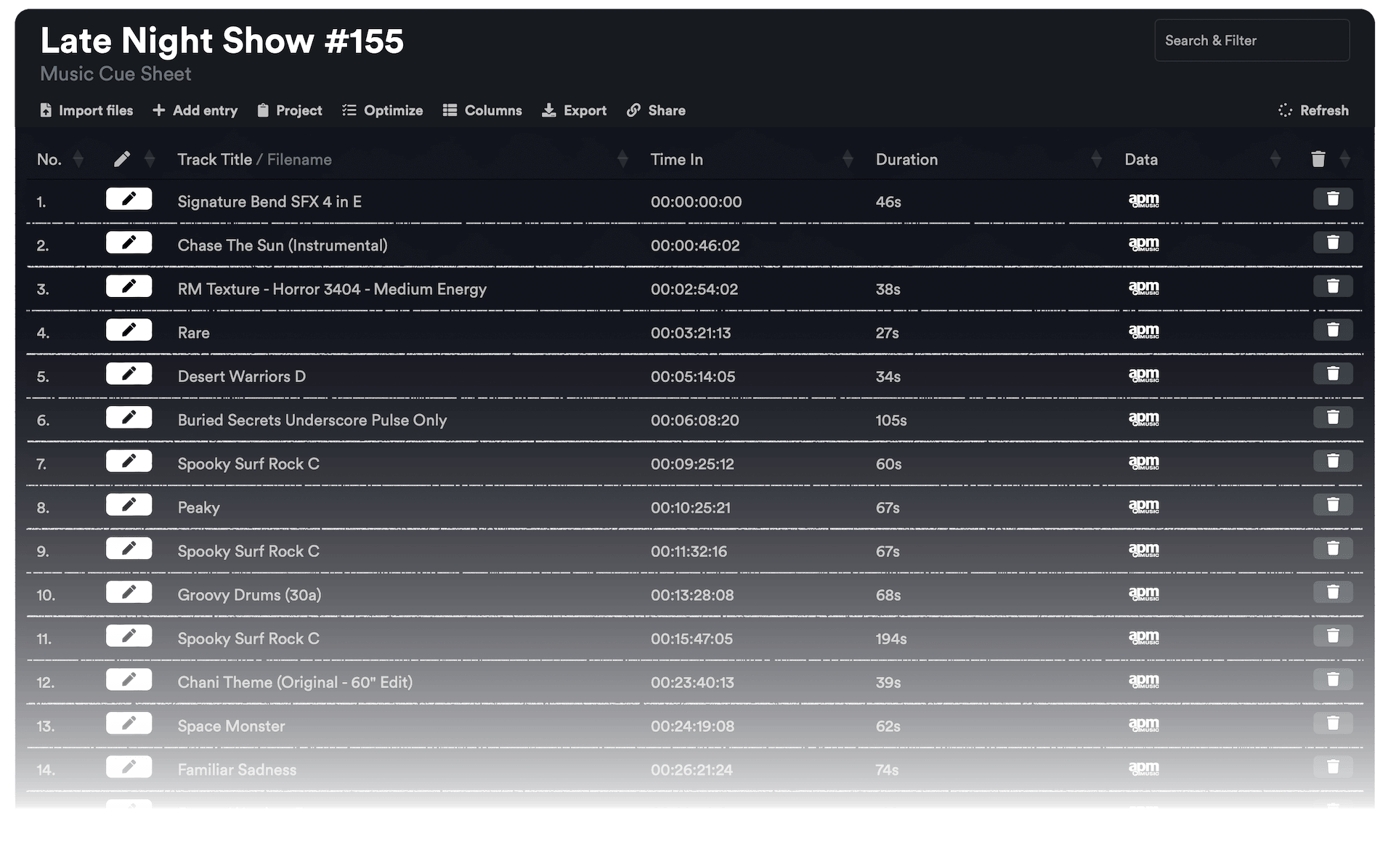
Need more? Check out our Music Cue Sheet Manager.

Key Features

  • Compatible with Media Composer, Pro Tools, Premiere Pro, Resolve, FCP and other editing software.
  • Merge tracks and remove invisible cuts automatically
  • Auto-fill metadata for over 15M+ tracks from 20+ partner libraries
  • Build and integrate your own metadata database
  • Customizable exports (CSV, Excel, CISAC & APRA)

Add metadata to your personal EditingTools database or library

Our tool supports a list of default values that can be added to the search database, which are explained below. Not all values are mandatory. Additional columns are possible.

NameTypeDescription
file_nameString (max. 200 characters)Filename up to 200 characters. If a filename is longer, it is truncated. If there are several variations of a file name, they can be listed in a column file_name_2, file_name_3, ...
track_titleString (max. 200 characters)Name of track
track_numberIntTrack number within the album.
track_durationIntTrack duration in seconds.
track_codeString (max. 100 characters)Optional track code (can include numbers and letters).
track_idIntA unique database track ID, must be numeric. Optional.
artistString (max. 200 characters)This is an optional artist name. If this value is empty, most cue sheets will automatically use the composer's values.
composerString (max. 200 characters)Composer Name. Multiple composers can be separated by a semicolon, e.g. "John Doe; John Smith".
composer_societyString (max. 200 characters)Name of the Composer Society. If a track has multiple composers, use semicolons to separate the societies.
composer_numberString (max. 200 characters)Number of the Composer. If a track has multiple composers, use semicolons to separate the number.
composer_shareString (max. 200 characters)Share of the Composer. If a track has multiple composers, use semicolons to separate the shares. Value between 1 and 100.
ownerString (max. 200 characters)
publisher
publisher_name
String (max. 200 characters)Publisher Name. Multiple publishers can be separated by a semicolon, e.g. "Pub1;Pub2".
publisher_societyString (max. 200 characters)Name of the Publisher Society. If a track has multiple publishers, use semicolons to separate the societies.
publisher_numberString (max. 200 characters)Number of the Publisher. If a track has multiple publishers, use semicolons to separate the number.
album_titleString (max. 200 characters)
album_catalog_numberInt
album_catalog_codeString (max. 200 characters)
album_release_dateDate (YYYY-MM-DD)Album release date. Leave blank if unknown.
album_disk_numberIntOptional disk number of the album.
album_total_discsString (max. 200 characters)Total number of disks in an album.
label_nameString (max. 200 characters)Name of the label.
label_codeIntLabel code, without "LC".
isrcString (max. 100 characters)
iswcString (max. 100 characters)
eanString (max. 100 characters)
upcString (max. 100 characters)
gemaString (max. 100 characters)
catalog_nameString (max. 200 characters)Name of the catalog/library the track is in.
bpmInt
genreString (max. 200 characters)

Mini Tutorials

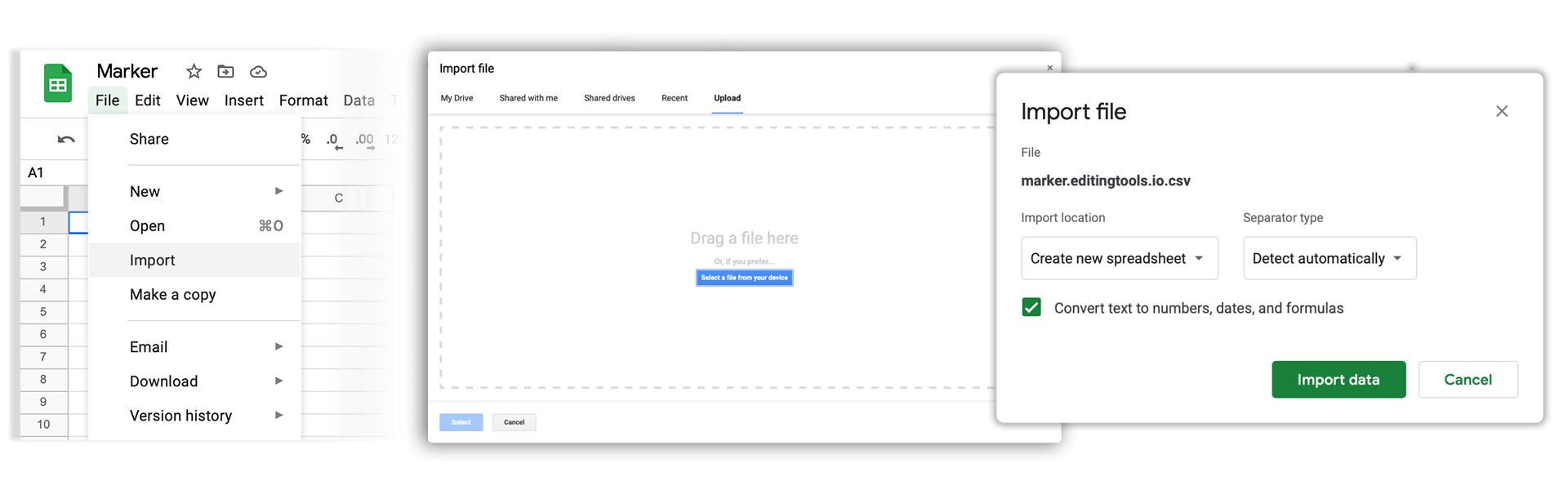
How do I import a csv file into Google Sheets?

Open Google Sheets and go to "File → Import". Upload the generated CSV file and press "Import Data" to generate a Sheet.

How do I import a csv file into Apple Numbers?

Open Numbers and go to "File → Open". Simply open the CSV file.

Hilfe & Support

Wenn du Fragen oder Funktionswünsche hast, wende dich bitte an unser Support-Team. Wir helfen dir gerne weiter!

FAQ

No, you still need to send out the final cue sheet. This tool will only help you to create them more quickly.

In order to upload AAF files, you will need a PRO account and to use our Cue Sheet Manager.

Our Cue Sheet Manager allows to edit entries.

Automatisiere deine Arbeitsabläufe mit unserer API

Egal, ob du ein Entwickler bist oder einfach nur mehr Prozesse mit Tools wie Zapier oder Make automatisieren möchtest, du kannst dieses Tool mit unserer API ganz einfach in deine Arbeitsabläufe integrieren. Erfahre mehr über die Integration der REST-API in unserer API-Dokumentation.

API-Dokumentation